Half-Day Keikyu Line Fishing Guide
Introduction
I don't normally build an article around a boat's own marketing copy — a caption on a photo gallery isn't evidence of anything by itself. But scroll through Masanobu-maru's own photo gallery, out of Hashirimizu Port in Yokosuka, and one line stops you: "Visitors from overseas, please come too!" One of the eight photos used in this article shows six men who read as Western, life jackets on, standing together on the deck. Most charter sites in Japan are written end to end for a Japanese audience, and you learn to read past that. This one stops to say it outright, in its own words, on its own site.
Why Hashirimizu Is a Hidden Gem for Golden Horse Mackerel
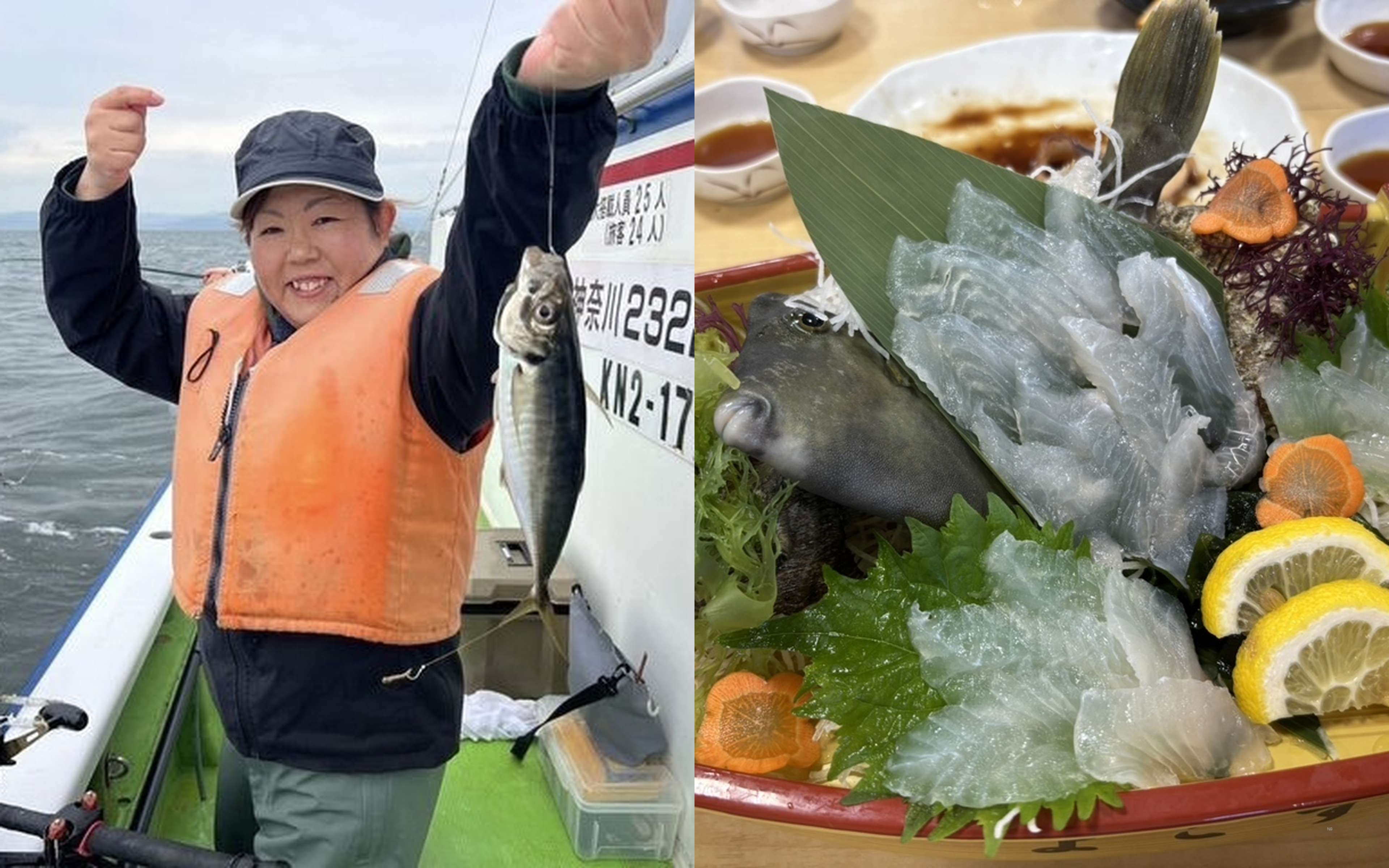
Hashirimizu sits on the Miura Peninsula in Yokosuka, a short hop from Tokyo on the Keikyu Line, and it's known among Japanese anglers for one fish in particular: the "golden horse mackerel," a brand name that's become well known in recent years for the horse mackerel caught in these waters. Masanobu-maru's own record for the fish stands at 53cm — a size that rarely turns up on an ordinary horse mackerel outing. The fishing grounds sit roughly fifteen minutes from the harbor, so little of the charter is spent in transit.
It's the kind of local travel find that stays inside Japan's own fishing culture rather than reaching international guides — fresh seafood and sea-to-table fishing on an easy day trip from Tokyo, in a corner of Tokyo Bay most visitors never think to look at twice.
The Fishing Experience – Step by Step 🎣
- Get to Hashirimizu Port. Ride the Keikyu Line to Horihaigan Station, then take the bus bound for Kannonzaki and get off at Hashirimizu-Kamimachi, a short walk from the harbor.
- Check in with the boat. Gather at Masanobu-maru one hour before departure, sign the passenger list, and put on a life jacket — everyone aboard wears one, anglers and non-anglers alike.
- Head out to the grounds. The shared-boat plans sail once two or more anglers have signed on, and the fishing grounds are only about fifteen minutes from the harbor.
- Fish the charter. Trips run from 7:15 a.m. with a target return of around 3 p.m. — about seven hours on the water, working the golden horse mackerel grounds or one of the boat's other target species.
- Head back to the dock. Bring your own food for the day and take your rubbish home with you — the boat's own house rule, and a small courtesy that keeps the deck clean for the next group.
Fishing Methods & Target Species
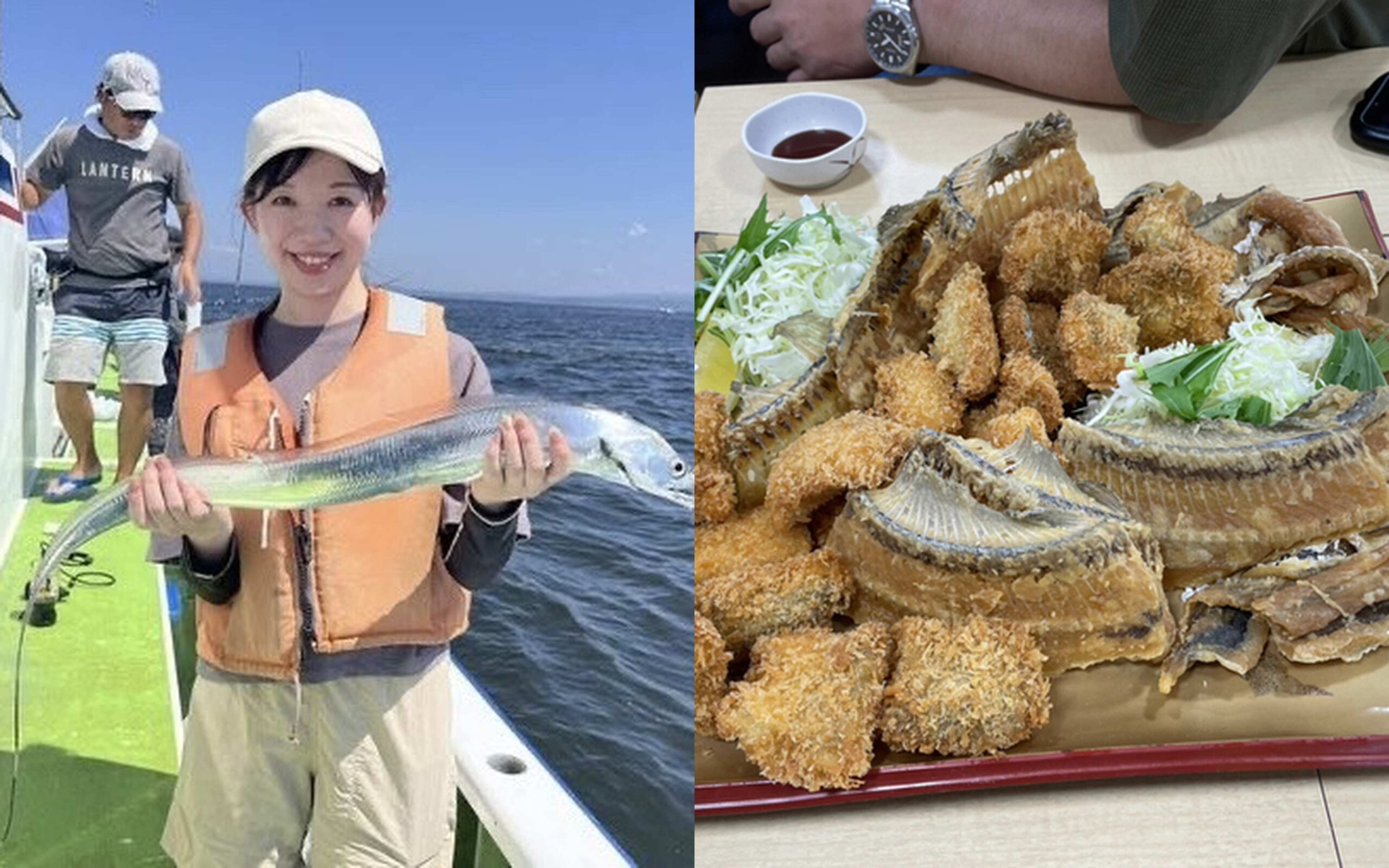
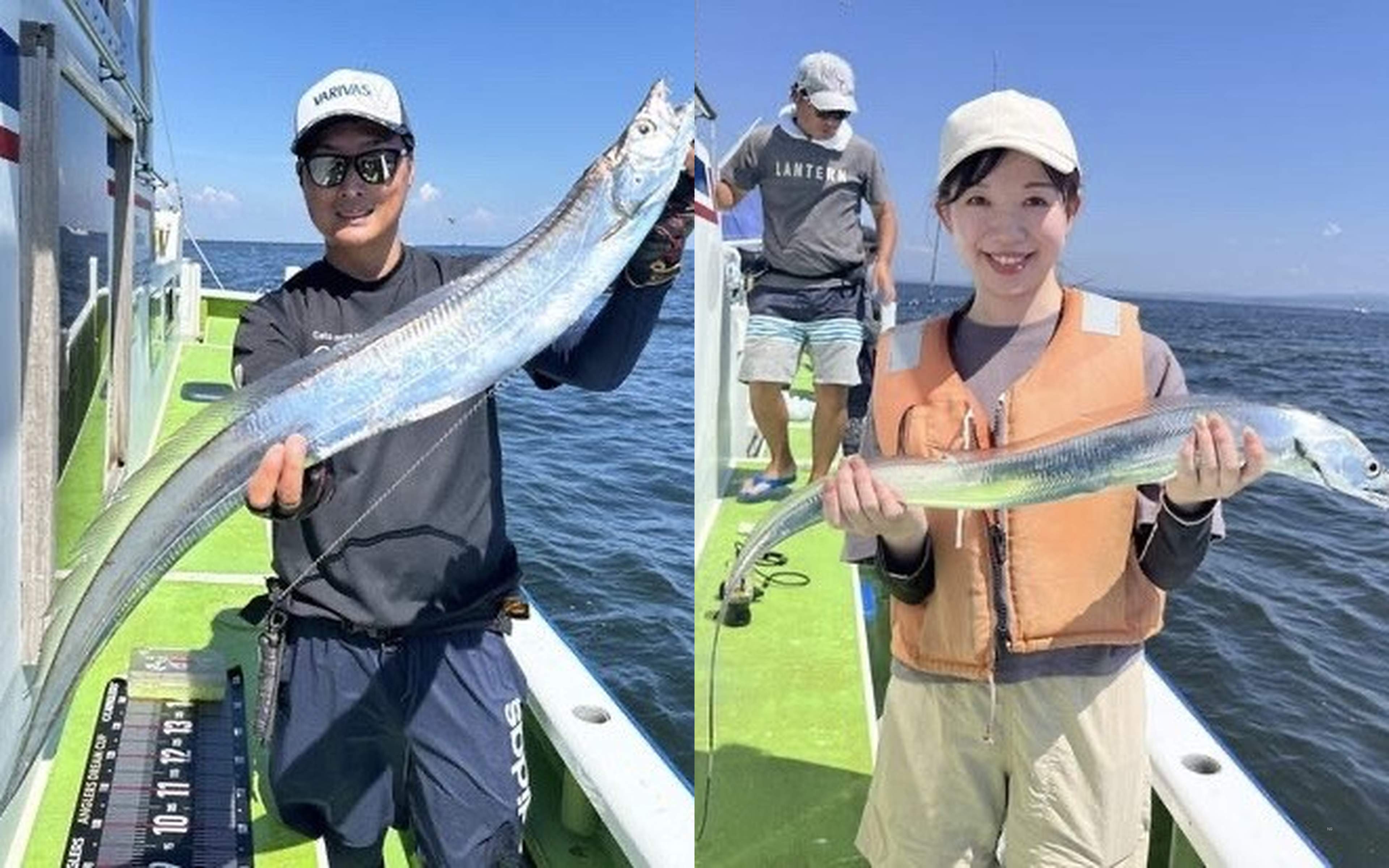
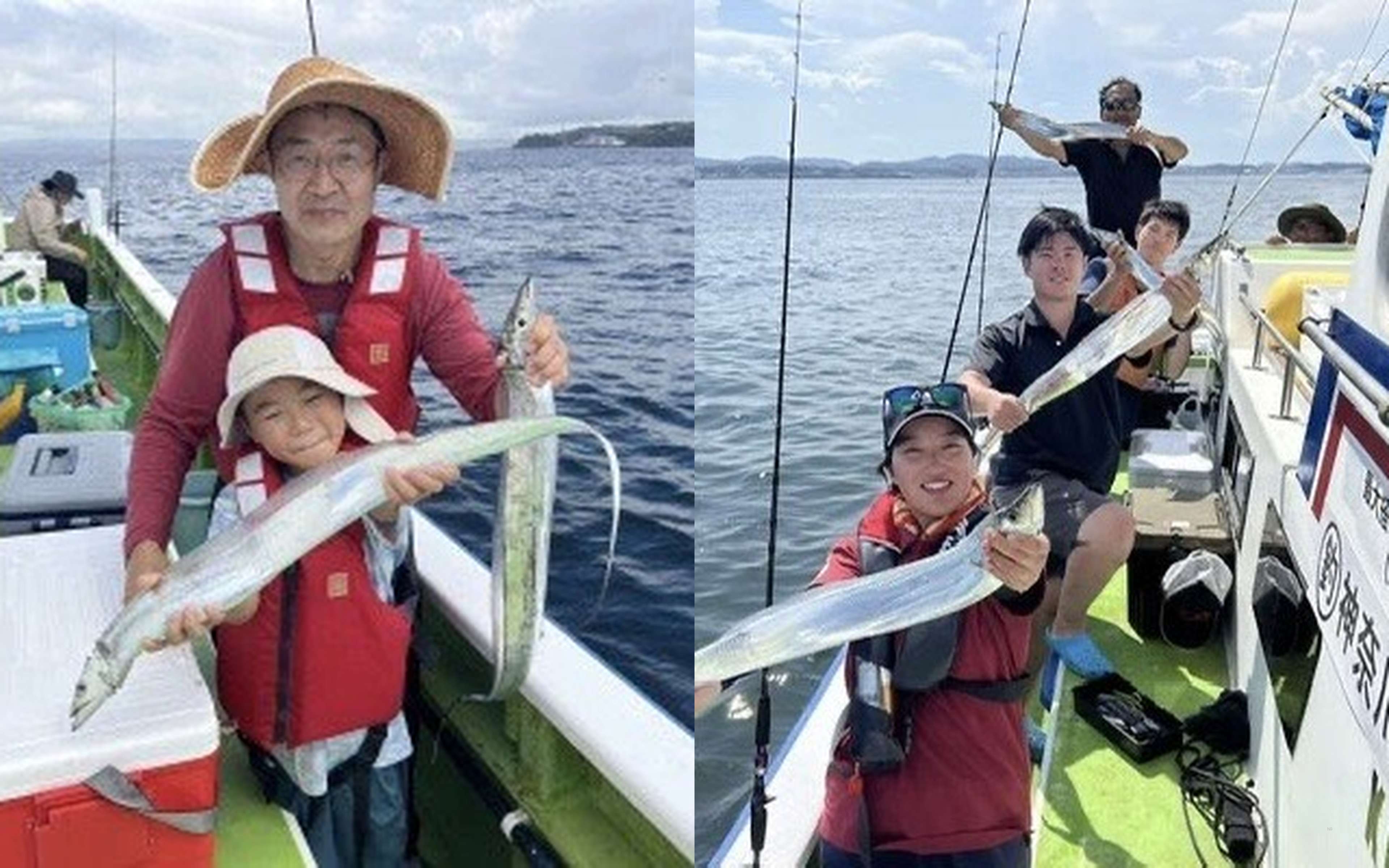
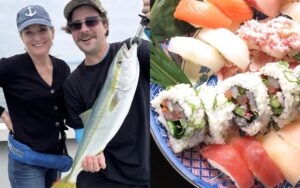
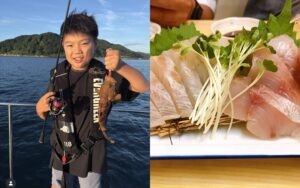
Six of the eight photographs used in this article show anglers holding cutlassfish (tachiuo) — a child in an orange life jacket, a couple fishing side by side, an older angler, all holding the same long, silver-bladed fish, Tokyo Bay open behind the rail in shot after shot. Masanobu-maru doesn't publish a daily catch report, so I can't tell you when any of these fish came aboard, or whether they came aboard on August 29th at all. What the photos do confirm is what the boat itself fishes for: cutlassfish and horse mackerel are unmistakable by shape, and both turn up again and again across the photographs used here.
- Cage-and-chum (bishi) fishing — for Hashirimizu's own "golden horse mackerel," using dyed squid strips as bait.
- Cutlassfish (tachiuo) — fished with tenya rigs, bait, or lures, depending on the day and the captain's read of the grounds.
- Tai-rubber jigging — a lighter, more technical approach for red sea bream worked over structure.
- Mixed bottom fishing — amberjack (inada/warasa) and Japanese whiting (kisu) also turn up on this boat's target list.
- Light-tackle and vertical jigging (bachi-kon) — for anglers who'd rather bring their own light gear than fish the standard cage rig.
Dinner After the Charter – Ryoshi-ryori Yokosuka 🍶
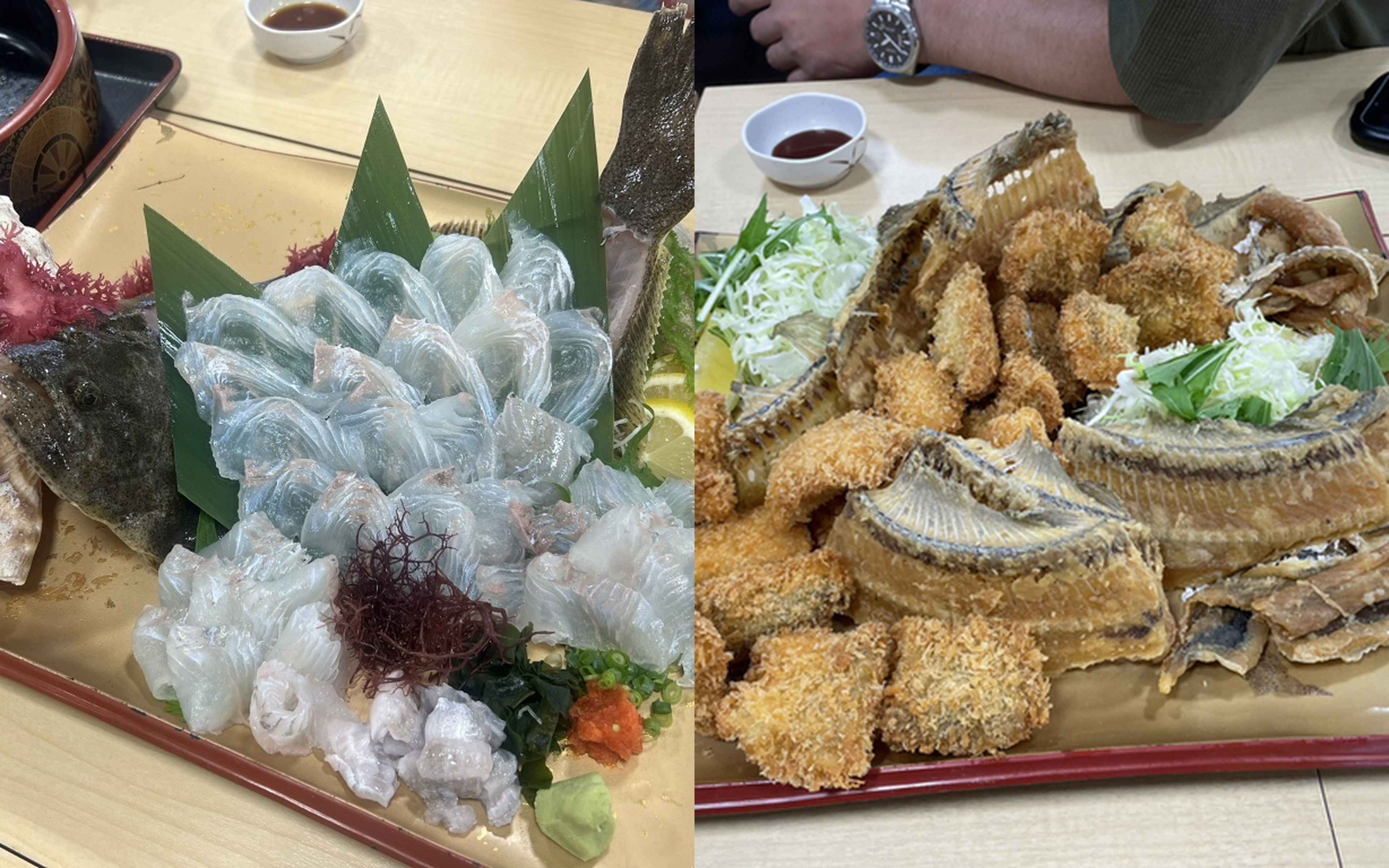
Ryoshi-ryori Yokosuka is a seafood restaurant in Kurihama, about 5km — roughly a fifteen-minute drive — from Hashirimizu Port. Whether the restaurant will cook a catch you bring in yourself is something I haven't confirmed yet, so I won't promise it either way. What's certain is that Kurihama is a fresh seafood destination in its own right, worth pairing with a morning out of Hashirimizu even before you factor in your own catch.
🗣️ Traveler Reviews – Why They Chose This Charter
🗣️ ⭐️⭐️⭐️⭐️⭐️
I'd read that the booking would be handled in English before we even landed, and I still expected some awkwardness at the dock. There wasn't any. Someone waved us aboard like we'd been coming for years, and it took me a good hour to stop being surprised by that.
— Mireille (France)
🗣️ ⭐️⭐️⭐️⭐️⭐️
My daughter doesn't sit still for anything, but she went quiet the second something started pulling on her line. I don't think she blinked until the fish cleared the rail, and she talked about the flash of silver on the deck the whole drive back.
— Esben (Denmark)
🗣️ ⭐️⭐️⭐️⭐️⭐️
We'd built the language barrier up into a bigger worry than it ever needed to be. Nobody on that boat made us feel like guests who needed managing — just people who'd come to fish, same as everyone else on deck that morning.
— Zanele (South Africa)
Reservation, Access & Pricing
Official Links ✨
- Masanobu-maru official site: https://masanobumaru.net/
- Ryoshi-ryori Yokosuka (Tabelog): https://tabelog.com/kanagawa/A1406/A140601/14066188/
Important:
Read the full pricing and schedule section before reserving — the departure time varies by season and by trip type!
Budget Guide 💴
Expect to budget $200–$300 per person for the full package — this covers guide arrangement, booking negotiation with the captain in Japanese, and English-language support throughout your day. Rental tackle and dinner afterward at Ryoshi-ryori Yokosuka vary and are arranged separately based on what you need.
Fishing Difficulty 🎯
Solo Travelers · Couples & Small Groups · Age limits and group minimums are set by each boat
Tackle rules differ too — some boats hire out rods and reels, some hire out nothing but life jackets. I confirm this boat's rules with the operator before you book; what is already confirmed for this one is in the Schedule section above.
Note: Catch results depend on nature — success is never guaranteed!
Schedule 🕘
The shared-boat plans run from 7:15 a.m. to 3 p.m., with the boat back at the dock after roughly seven hours at sea — though the exact departure and return times are worked out directly with the captain. Gather at the boat one hour before departure to sign the passenger list; these plans sail once two or more anglers have booked in.
What to Bring 🎒
☀️ Spring/Summer: Sunscreen, sunglasses, a wide-brim hat, plenty of water, and light snacks. The deck is fully exposed — no shade. Stay hydrated, especially on early-morning departures and the return leg.
❄️ Autumn/Winter: The sea is colder than on land. Dress at least two layers warmer than you would ashore, and bring a windproof outer layer.
👟 Footwear: Water-resistant shoes or sandals that can get wet and won't slip on a wet deck.
📦 Optional: Motion sickness tablets if you're prone to seasickness, a towel, a change of clothes, and a camera.
🚚 For travelers continuing to another city: Cool-pack delivery of your catch to your next accommodation can be arranged on request.
Full seasonal gear details: Spring/Summer Gear Guide · Autumn/Winter Gear Guide
Why Book Your Charter Through Me?
Most Japanese fishing boats accept reservations only in Japanese.
Partner restaurants typically do not advertise "cook-your-catch" or sushi-making courses on public-facing menus.
That's why I handle all direct negotiations and arrangements — so your day runs without friction.
- ✅ I contact the captain directly in Japanese to confirm your date, party size, and preferred fishing style.
- ✅ Before departure, I'll walk you through the full day schedule so you arrive confident and prepared.
- ✅ I coordinate the dining experience and meal timing at the partner restaurant so everything connects seamlessly.
- ✅ I handle any allergy, dietary, or special-requirements communication with the restaurant.
- ✅ If bad weather forces a cancellation, I'll immediately propose alternative sightseeing options so your day isn't wasted.
- ✅ On-call support in English throughout the day for anything that comes up.
- ✅ I am the only guide in Japan specialising in fishing + dining packages for international travelers.
Frequently Asked Questions
- "I want to try fishing in Japan but have absolutely no idea where to start." 👉 That is exactly what I am here for — guiding international travelers through the whole process is my specialty.
- "I only have one day here. Can I really fit fishing into my itinerary?" 👉 Often, yes — but departure and return times vary enormously, from pre-dawn starts to trips that finish after dark. See the Schedule section above for this boat, tell me your dates, and I'll work out what fits around the rest of your trip.
- "Is it safe for kids and beginners?" 👉 Wearing a life jacket is the rule on Japanese charter boats, and many of the boats I work with take complete beginners. Age limits are set by each operator, though, and some do not take children at all — so check the Schedule section above, or ask me and I'll confirm before you book.
- "I don't speak any Japanese. Will I be able to manage on the boat?" 👉 Of course. I brief you thoroughly in English beforehand and stay in contact throughout the day for anything that comes up.
- "Can I rent fishing gear on the day?" 👉 It depends on the boat. Some hire out rods and reels; others hire out nothing but life jackets and expect you to arrive with your own tackle. I check what this boat does before you book, and if you need to bring your own I'll pass on the exact specifications it asks for.
- "What if the weather is bad on my day?" 👉 Safety always comes first. If the charter is cancelled due to rough seas, I'll have an alternative day plan ready for you immediately.
- "Do all plans require a minimum group size?" 👉 It varies by boat and by plan — some take solo anglers on a shared boat, while a private charter often sets a minimum. Tell me your party size and I'll find the plans that work for it.
How to Get to Hashirimizu Port
By train, take the Keikyu Line to Horihaigan Station, then transfer to the bus bound for Kannonzaki and get off at the Hashirimizu-Kamimachi stop — Masanobu-maru's mooring is a short walk from there. The station and the port sit about 2.2km apart in a straight line.
By car, take the Yokohama-Yokosuka Road to the Horihaigan Exit, turn right, and follow the coast road toward Kannonzaki. Past a sharp downhill curve just beyond Hashirimizu Elementary School, the angler parking lot is on the left. One note straight from the boat: enter the address into your car's navigation system rather than the phone number — a phone-number search reportedly lands you somewhere else entirely.
Summary
A boat that puts “visitors from overseas, please come too” in its own photo gallery has already answered the question most travelers hesitate to ask out loud. Alongside that line sits a boat record for the golden horse mackerel Hashirimizu has become known for, and six photographs of anglers holding cutlassfish. If a boat that already says "please come" sounds like the kind of hidden gem worth building a Tokyo day trip around, let's start working out dates.
🗣️ ⭐️⭐️⭐️⭐️⭐️
I'd seen boats promise a warm welcome before and then treat you like an inconvenience the moment you actually showed up. This one didn't. Somebody had clearly decided, long before we ever booked, that guests like us were supposed to be there.
— Callum (Scotland)
👉 中文咨询请点击此处 ※使用翻译软件进行处理
※ Guest voices in this article are illustrative scenarios based on typical experiences, not actual customer reviews.

Comments