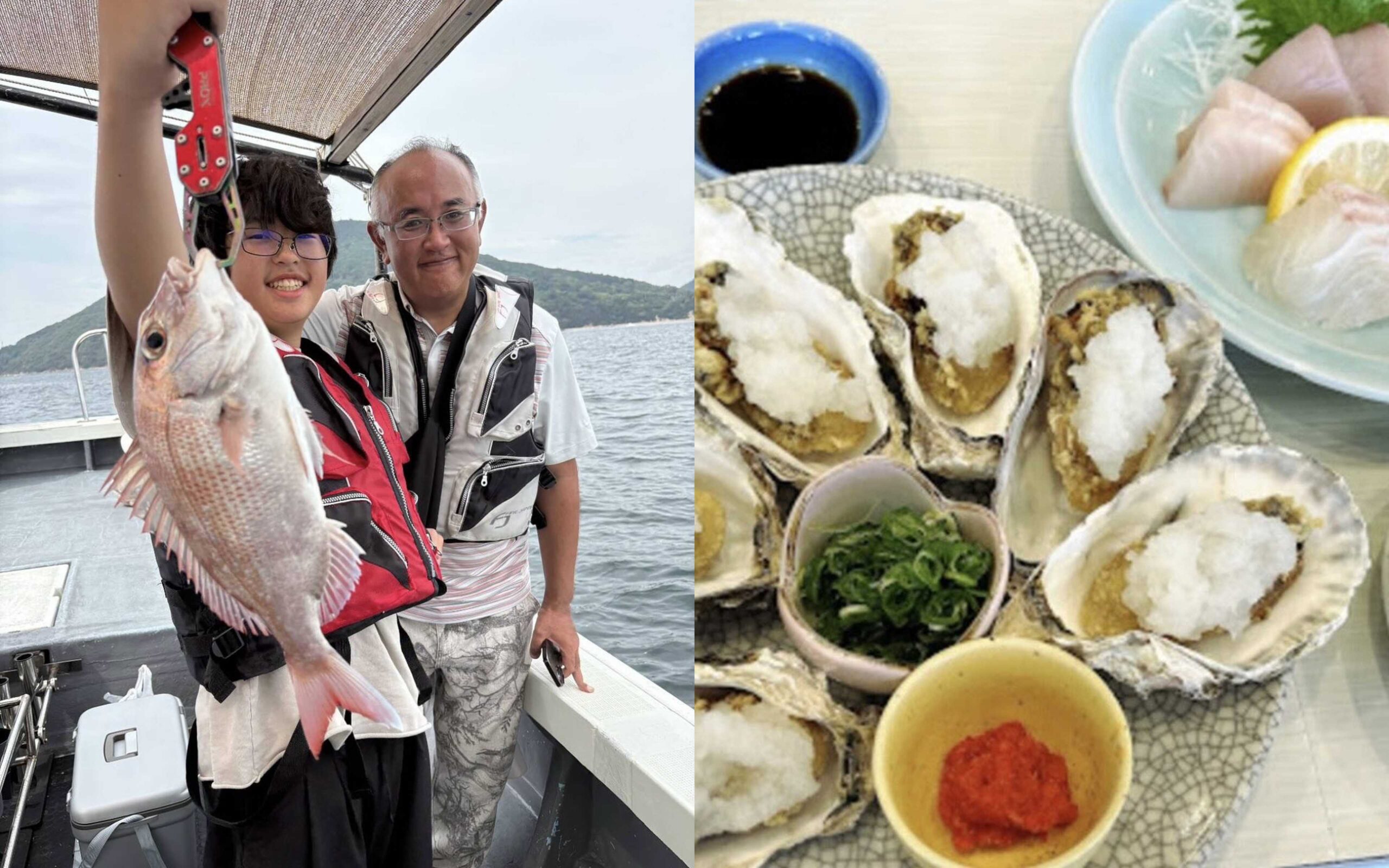
Introduction
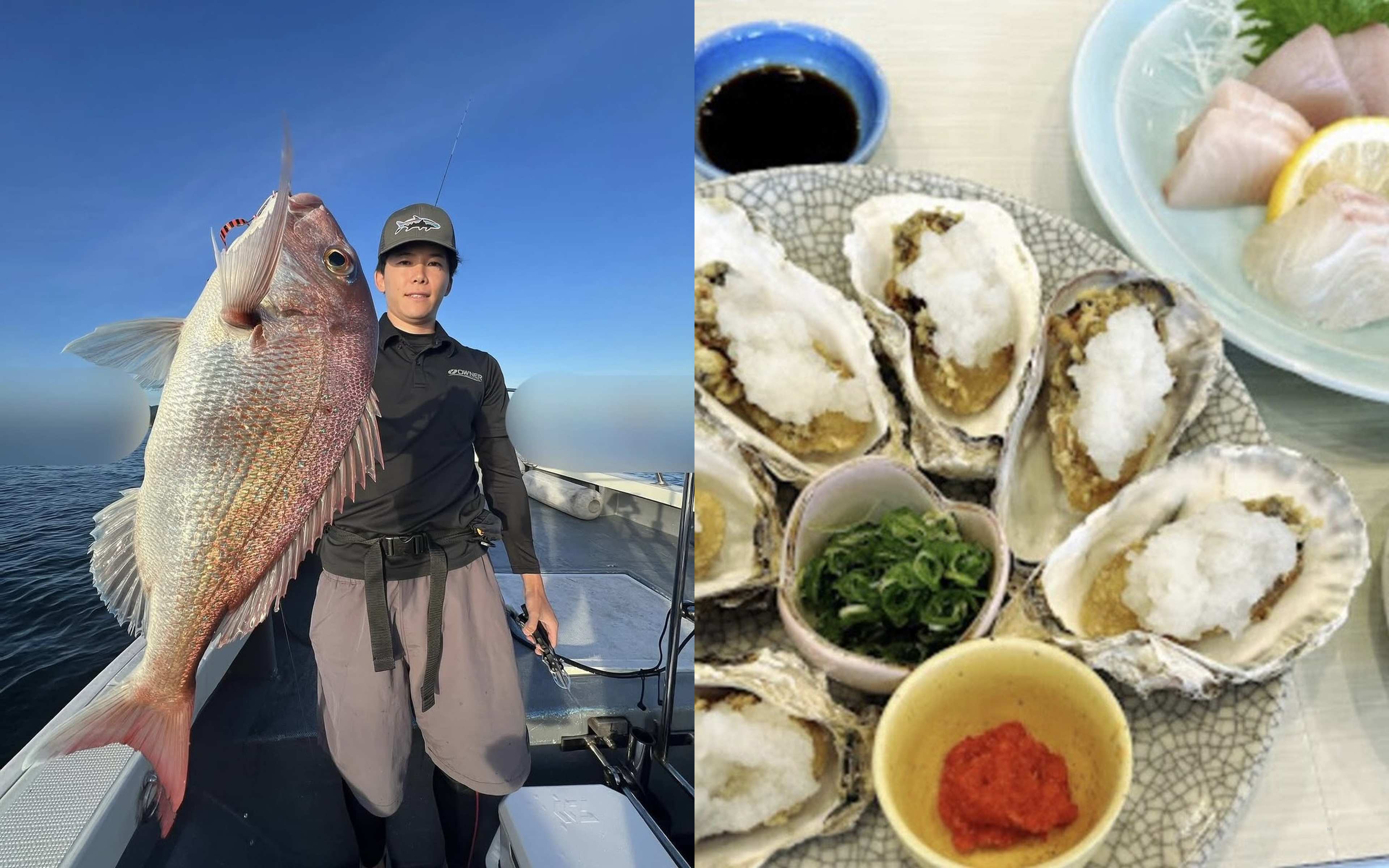
Nine photographs came back from the boat, and the first thing I noticed was how little they varied. All nine fish were red sea bream. All nine had been caught on tai-rubber — a jig with a rubber skirt, worked up and down near the seabed. That isn't how most of the boats I write up look when you lay their photos side by side.
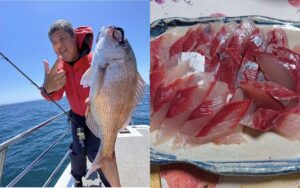
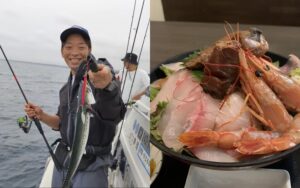
In the first frame, a man in a dark rain jacket is laughing with his eyes half shut, both arms wrapped around a red sea bream too big to hold any other way. The body is a russet brown that runs to bright vermilion along the edges of the fins. The sky is grey and the sea behind him is a deep indigo.
Konpira-maru runs out of Hinase, in Bizen City, Okayama, and fishes tai-rubber and nothing else, all year round. It holds a 4.9-star rating across 17 Google reviews. The reservation and all the back-and-forth in Japanese is the part I take off your hands.
The Fishing Experience – Step by Step 🎣
- Meet at the harbour — You gather at the Hinase Civic Hall rear harbour. The meeting time changes from day to day, so it gets fixed when the booking is confirmed.
- Board and set up — Every fishing station has a rod holder with a pocket for your lure, and a fish finder positioned so you can see it from your seat. There is a private flush toilet on board.
- Fish tai-rubber, and only tai-rubber — One method, from the first drop to the last. The boat doesn't switch to anything else.
- Work through your skirts — Through the day you change the colour and the action of the skirt, feeling out what the fish will take that morning.
- Return to the harbour — The boat comes back somewhere between 15:00 and 18:00, set by the distance to the grounds, the season, the tide and the weather.
Fishing Methods & Target Species
Tai-rubber (tairaba) is a vertical technique. You drop a weighted head trailing a rubber skirt — the skirt is called a necktie in Japanese — down near the seabed, then raise and lower it steadily and wait for the weight in your hands to change. One method, one target: red sea bream.
This boat does nothing else. You won't be changing techniques halfway through the day, and you won't be chasing a second species.
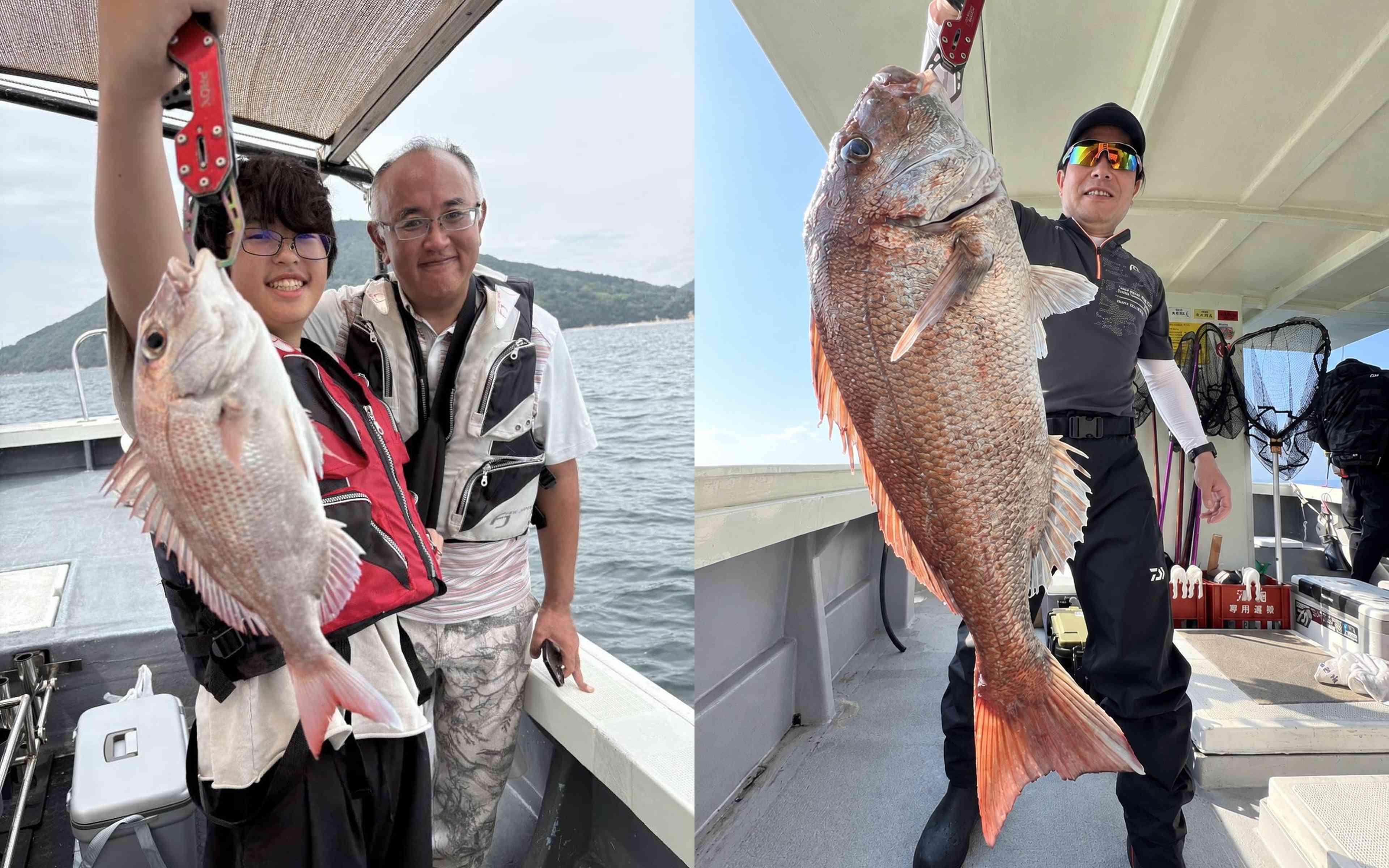
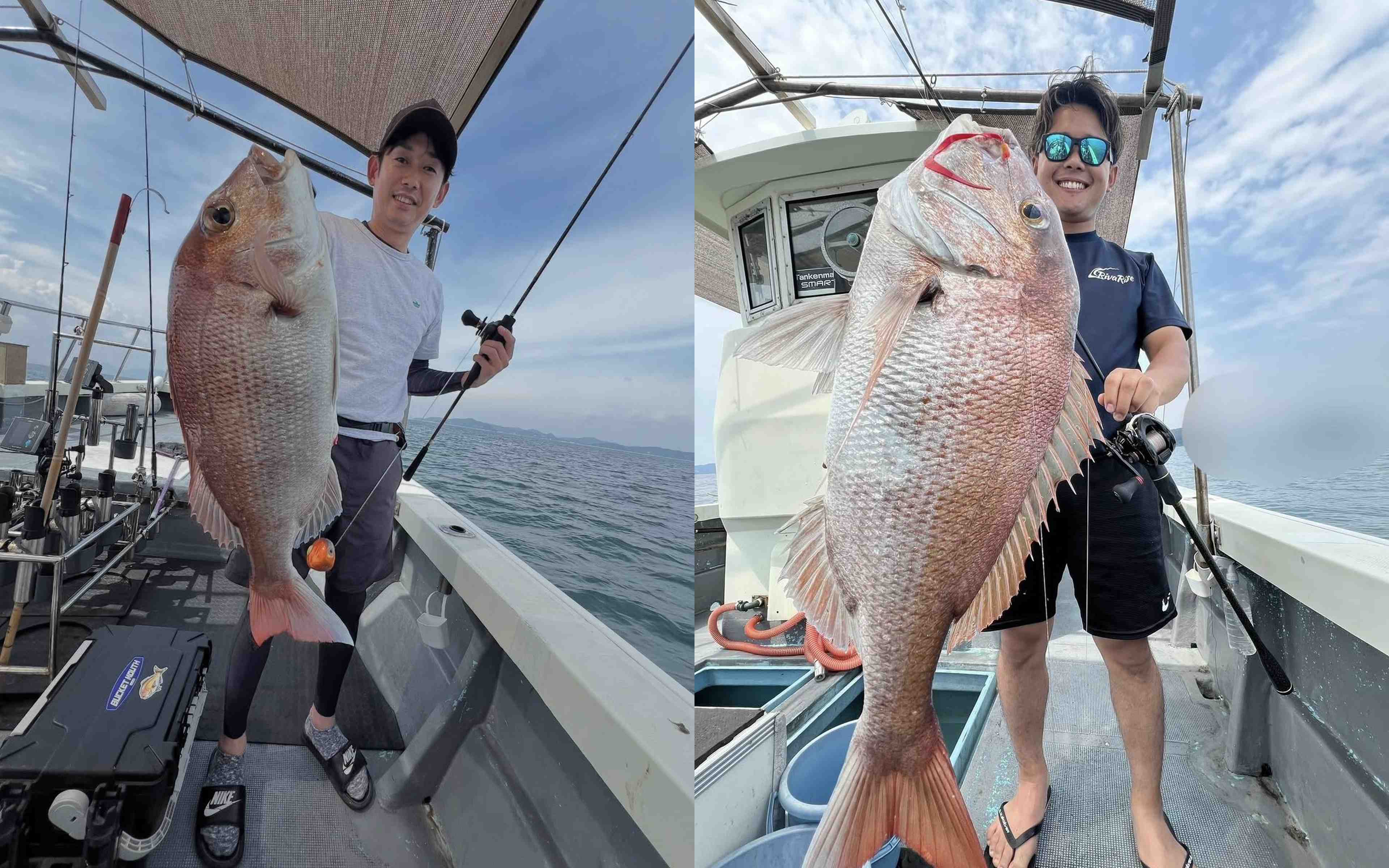
Look closely at the photographs and the neckties still hooked in the fish are a different colour in nearly every frame — orange, solid red, red and white stripes. The boat's own guidance is to bring skirts spanning weak to strong action, which tells you the same thing: this isn't a one-skirt day.
In one image an orange tai-rubber head hangs clearly below the fish. The sizes vary widely, from fish an angler needs both arms for down to ones lifted easily in one hand. Around the deck there's a red fish grip, landing nets, and white cooler boxes.
🗣️ Traveler Reviews – Why They Chose This Charter
A few people who have fished this boat through me shared their impressions afterward:
I'd been told it was the same drop and the same lift, over and over, and I assumed I'd get bored. What actually happens is that you spend the whole day waiting for the weight in your hands to change, and that turns out to be nothing like boredom.
— Ronan (Canada)
The part that sold me was being able to take the train. No hire car, no getting lost on country roads — I walked out of Hinase Station and I was there. Out on the water there were small islands scattered in every direction, which I hadn't expected at all.
— Solveig (Norway)
I was anxious about having to bring my own rod and reel and getting the setup wrong. Sorting it out beforehand turned into part of the trip, and by the time I was on the water I knew exactly why I had what I had.
— Nuria (Spain)
Reservation, Access & Pricing
Official Links ✨
- Official website: https://konpiramaru.jimdofree.com/
- Phone: 090-4760-0443 (calls taken until 20:00), or enquire via LINE
- Availability: open dates are posted on the boat's Ameblo blog under 出船予定 (departure schedule)
- Licensing: registered angling vessel, Okayama Prefecture No. 201
Important:
Read the full pricing and schedule section before reserving — the departure time varies by season and by trip type!
Budget Guide 💴
A full day of tai-rubber aboard Konpira-maru runs $200–$300 per person. That covers arranging the charter, negotiating the booking with the boat in Japanese, and English-language support before and on the day.
What it does not cover is tackle. This boat hires out no rods or reels, so your own gear comes with you — see the Schedule section below, and talk to me early if you want to check whether what you own will work here.
Fishing Difficulty 🎯
Solo Travelers · Couples & Small Groups · Age limits and group minimums are set by each boat
Tackle rules differ too — some boats hire out rods and reels, some hire out nothing but life jackets. I confirm this boat's rules with the operator before you book; what is already confirmed for this one is in the Schedule section above.
Note: Catch results depend on nature — success is never guaranteed!
Schedule 🕘
Konpira-maru publishes no fixed departure time. Departures fall somewhere between 04:00 and 09:00 and returns between 15:00 and 18:00, adjusted for the distance to the grounds, the season, the tide and the weather. The boat's own wording is that an early-morning departure tends to be the norm. The actual meeting time is settled when your booking is confirmed.
The usual boarding point is the Hinase Civic Hall rear harbour. On days when the tide is low it shifts to the Hinase Station pier (日生駅前桟橋), directly in front of the station. Which one applies to your date has to be confirmed in advance.
Two things to know before you book, because they are unusual. The boat does not hire out rods or reels. Its own notice says so plainly; life jackets can be borrowed, but fishing tackle cannot. And junior high school students and younger cannot board — there is no child rate for under-18s either.
The tackle guidance is unusually specific as well. Sinkers and hooks are specified by the boat when you book. Line is PE #0.6–#0.8 with a #3–#4 leader, joined with a PR or FG knot; #0.6 with a #3 leader from November through March, #0.8 with a #4 leader from April through October. The rod should be a tai-rubber rod, not too stiff, in the UL to ML range, and the reel a PG (power gear) model with twin handles. The boat goes as far as to say that deep tai-rubber, egging and jigging tackle often doesn't suit these waters.
Put together, this is a boat for anglers who already own their tackle, not a day you turn up to empty-handed. Whether what you have will do the job is a question the boat will answer — and asking it is my job, not yours.
Two more rules. Alcohol is prohibited, both drinking before you board and drinking once aboard, following the amendment to the Angling Vessel Business Act that took effect on 1 April 2024. And if you smoke, bring a portable ashtray: the hull is FRP and vulnerable to heat, and the boat may decline to let you smoke without one.
What to Bring 🎒
☀️ Spring/Summer: Sunscreen, sunglasses, a wide-brim hat, plenty of water, and light snacks. The deck is fully exposed — no shade. Stay hydrated, especially on early-morning departures and the return leg.
❄️ Autumn/Winter: The sea is colder than on land. Dress at least two layers warmer than you would ashore, and bring a windproof outer layer.
👟 Footwear: Water-resistant shoes or sandals that can get wet and won't slip on a wet deck.
📦 Optional: Motion sickness tablets if you're prone to seasickness, a towel, a change of clothes, and a camera.
🚚 For travelers continuing to another city: Cool-pack delivery of your catch to your next accommodation can be arranged on request.
Full seasonal gear details: Spring/Summer Gear Guide · Autumn/Winter Gear Guide
How to Get to Hinase Harbour
Hinase Station is on the JR Ako Line, and the boarding point is about 314 metres from it — a four-minute walk. That makes this one of the few boats in this series you can reach by train. On a low-tide day, when boarding moves to the Hinase Station pier, you are walking from the platform to the dock.
The address is 241-87 Hinase, Hinase-cho, Bizen City, Okayama, and parking is at the same place. The official site carries an aerial diagram of the harbour with the parking zones colour-coded: red where you may park, blue where parking is barred from November to the end of March, and yellow where it is barred outright.
The boat asks for a few specific courtesies here, and they are worth taking seriously, because houses back directly onto this car park. Don't leave your engine idling, don't hold conversations at volume, don't drop litter, and don't wander onto the neighbouring property. Departures can be as early as 04:00, and at that hour an idling engine carries.
If you have time either side of the trip, the Bizen Osafune Japanese Sword Museum is 17.7 km and about 33 minutes from the harbour by car. It keeps a forge where swords are made — a brick hearth, heavy wooden roof beams, an earthen floor and an iron anvil. I haven't checked its opening hours, closing days, admission, or whether smithing is demonstrated on any given day, so look that up before you go.
Dinner After the Charter – Hamashin 🍶
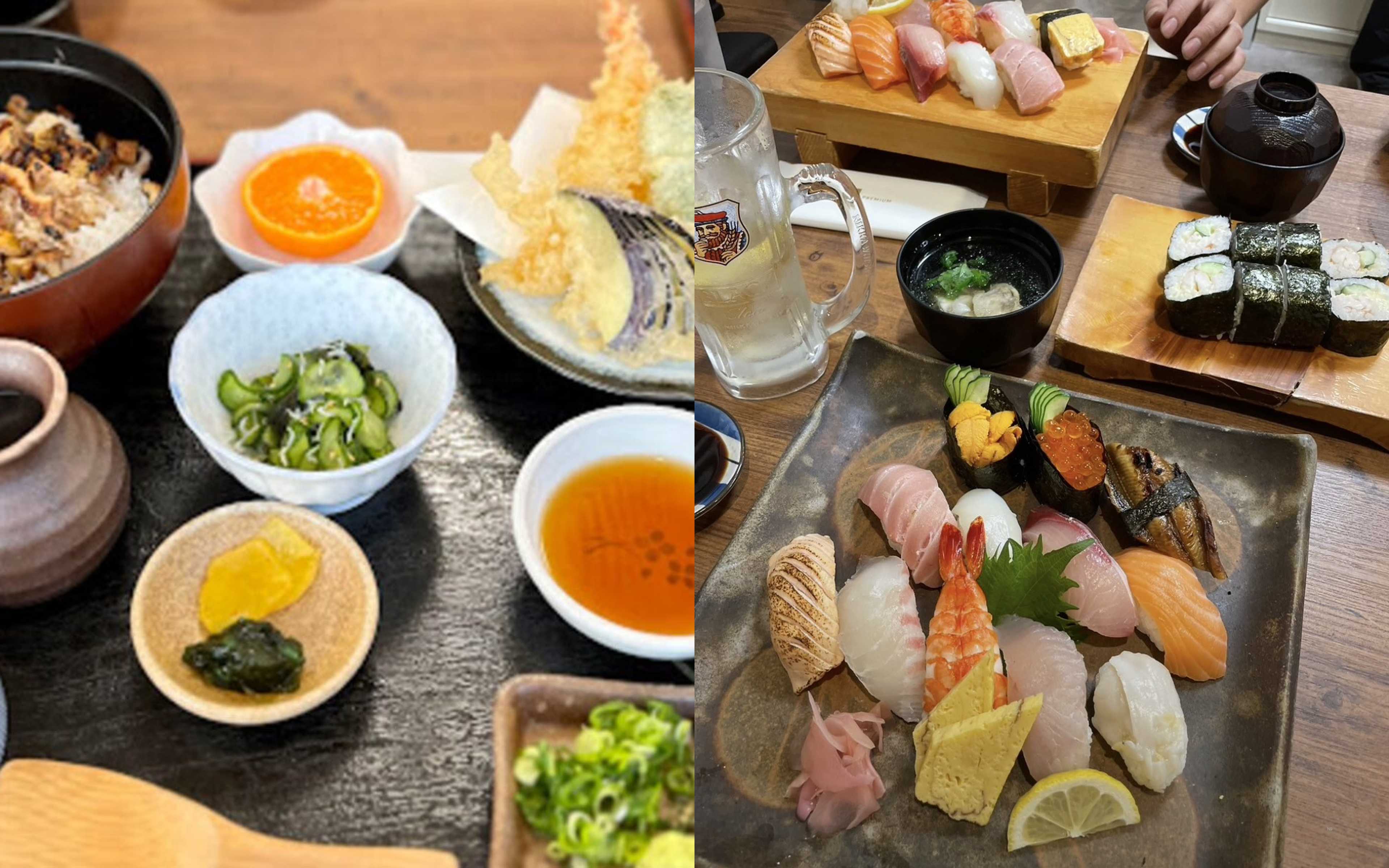
The boat's dining partner is Hamashin (御食事処 はましん), at 241-30 Hinase, Hinase-cho, Bizen City; the number is 0869-72-3145. From the boarding point it is 127 metres — a two-minute walk, and both sit at address number 241. Of every partner restaurant I've written up in this series, none has been a shorter walk.
Hamashin holds a 4.4-star rating across 352 reviews. It's a Japanese restaurant, and the menu runs to sashimi sets, hitsumabushi, conger eel, and oysters both fried and as a set. There's a tatami room upstairs. Weekends get busy, so a reservation is worth making.
Lunch runs 11:00–14:00 and dinner 17:00–20:30 (dinner closes at 19:30 on Sundays). Closed Wednesdays.
The timing is worth thinking through. The boat returns between 15:00 and 18:00, so on a day it comes in early, lunch service has already finished and dinner doesn't start until 17:00 — there's a gap to fill. Come in closer to 18:00 and you step off the boat and straight into dinner. Once the return time firms up, a call ahead makes the difference. Whether Hamashin will cook a catch you carry in yourself hasn't been confirmed, so please don't build the day around it; if it matters to you, I'll ring them and ask.
Why Book Your Charter Through Me?
Most Japanese fishing boats accept reservations only in Japanese.
Partner restaurants typically do not advertise "cook-your-catch" or sushi-making courses on public-facing menus.
That's why I handle all direct negotiations and arrangements — so your day runs without friction.
- ✅ I contact the captain directly in Japanese to confirm your date, party size, and preferred fishing style.
- ✅ Before departure, I'll walk you through the full day schedule so you arrive confident and prepared.
- ✅ I coordinate the dining experience and meal timing at the partner restaurant so everything connects seamlessly.
- ✅ I handle any allergy, dietary, or special-requirements communication with the restaurant.
- ✅ If bad weather forces a cancellation, I'll immediately propose alternative sightseeing options so your day isn't wasted.
- ✅ On-call support in English throughout the day for anything that comes up.
- ✅ I am the only guide in Japan specialising in fishing + dining packages for international travelers.
Frequently Asked Questions
- "I want to try fishing in Japan but have absolutely no idea where to start." 👉 That is exactly what I am here for — guiding international travelers through the whole process is my specialty.
- "I only have one day here. Can I really fit fishing into my itinerary?" 👉 Often, yes — but departure and return times vary enormously, from pre-dawn starts to trips that finish after dark. See the Schedule section above for this boat, tell me your dates, and I'll work out what fits around the rest of your trip.
- "Is it safe for kids and beginners?" 👉 Wearing a life jacket is the rule on Japanese charter boats, and many of the boats I work with take complete beginners. Age limits are set by each operator, though, and some do not take children at all — so check the Schedule section above, or ask me and I'll confirm before you book.
- "I don't speak any Japanese. Will I be able to manage on the boat?" 👉 Of course. I brief you thoroughly in English beforehand and stay in contact throughout the day for anything that comes up.
- "Can I rent fishing gear on the day?" 👉 It depends on the boat. Some hire out rods and reels; others hire out nothing but life jackets and expect you to arrive with your own tackle. I check what this boat does before you book, and if you need to bring your own I'll pass on the exact specifications it asks for.
- "What if the weather is bad on my day?" 👉 Safety always comes first. If the charter is cancelled due to rough seas, I'll have an alternative day plan ready for you immediately.
- "Do all plans require a minimum group size?" 👉 It varies by boat and by plan — some take solo anglers on a shared boat, while a private charter often sets a minimum. Tell me your party size and I'll find the plans that work for it.
Summary
One lure, one fish, all year. And a harbour you can walk to from the station in four minutes, which in this series is rare enough to be the second reason to look at this boat rather than the first.
The catch is the tackle. Konpira-maru hires out nothing but life jackets, and it's specific about what it wants you holding. That makes it a poor fit for a first-ever day on the water and a good one if you already fish and would rather not have the gear chosen for you. If you want to work out whether what you own will do, or just talk through dates, get in touch.
I came on my own and wasn't sure how that would go. Once the fishing started it turned out nobody was paying attention to anything except their own line, which suited me completely. Afterwards I sat down to sashimi a few minutes' walk from where we'd tied up, and that was the part I keep describing to people.
— Iker (Spain)
👉 中文咨询请点击此处 ※使用翻译软件进行处理
※ Guest voices in this article are illustrative scenarios based on typical experiences, not actual customer reviews.

Comments