Half-Day Tomioka Fishing Guide
Introduction
I hesitate a little before recommending Tomioka — not because the fishing falls short, but because once you're off the train, the whole day turns out to sit inside a single small loop: station, port, and dinner table, all within a few minutes of one another.
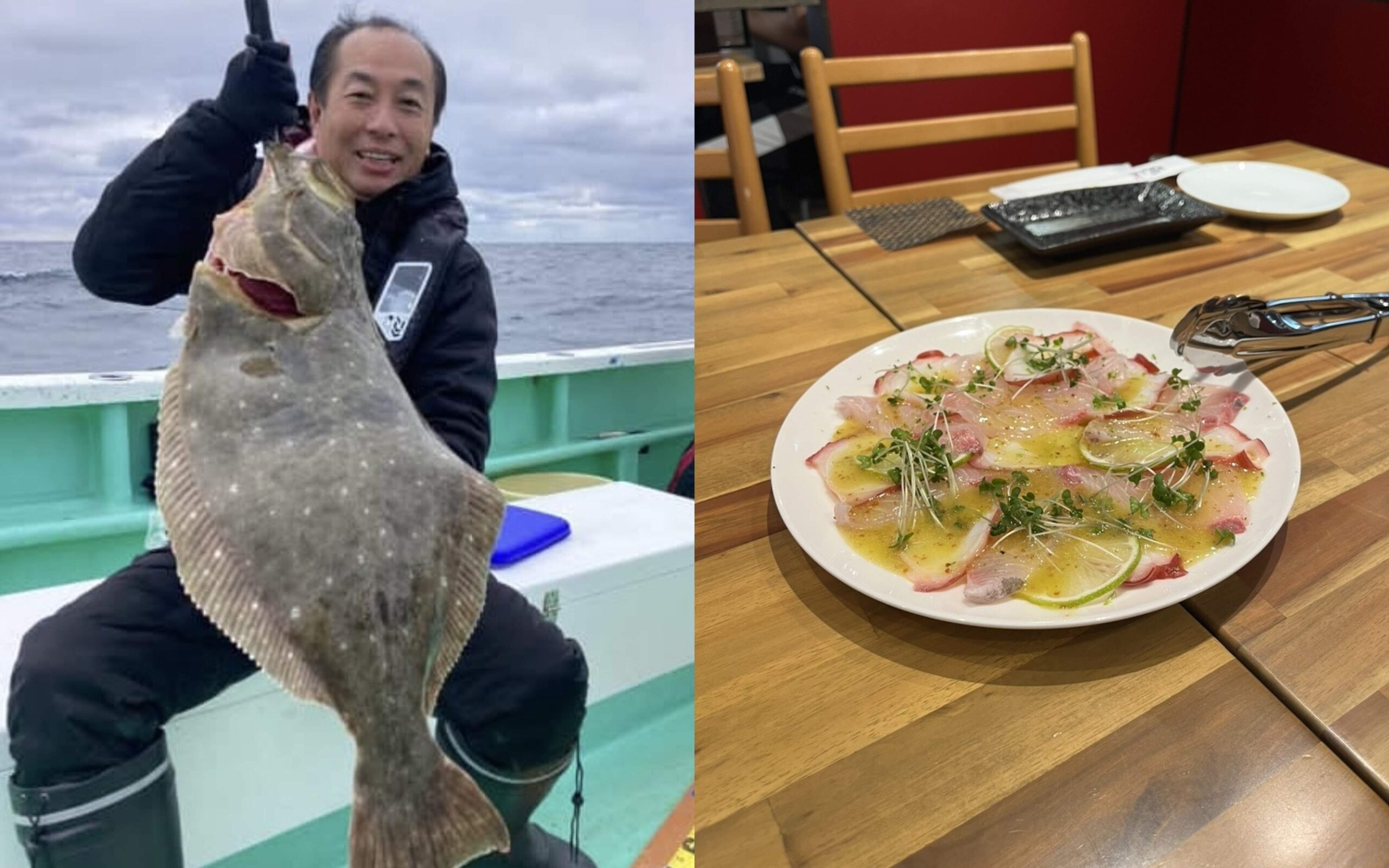
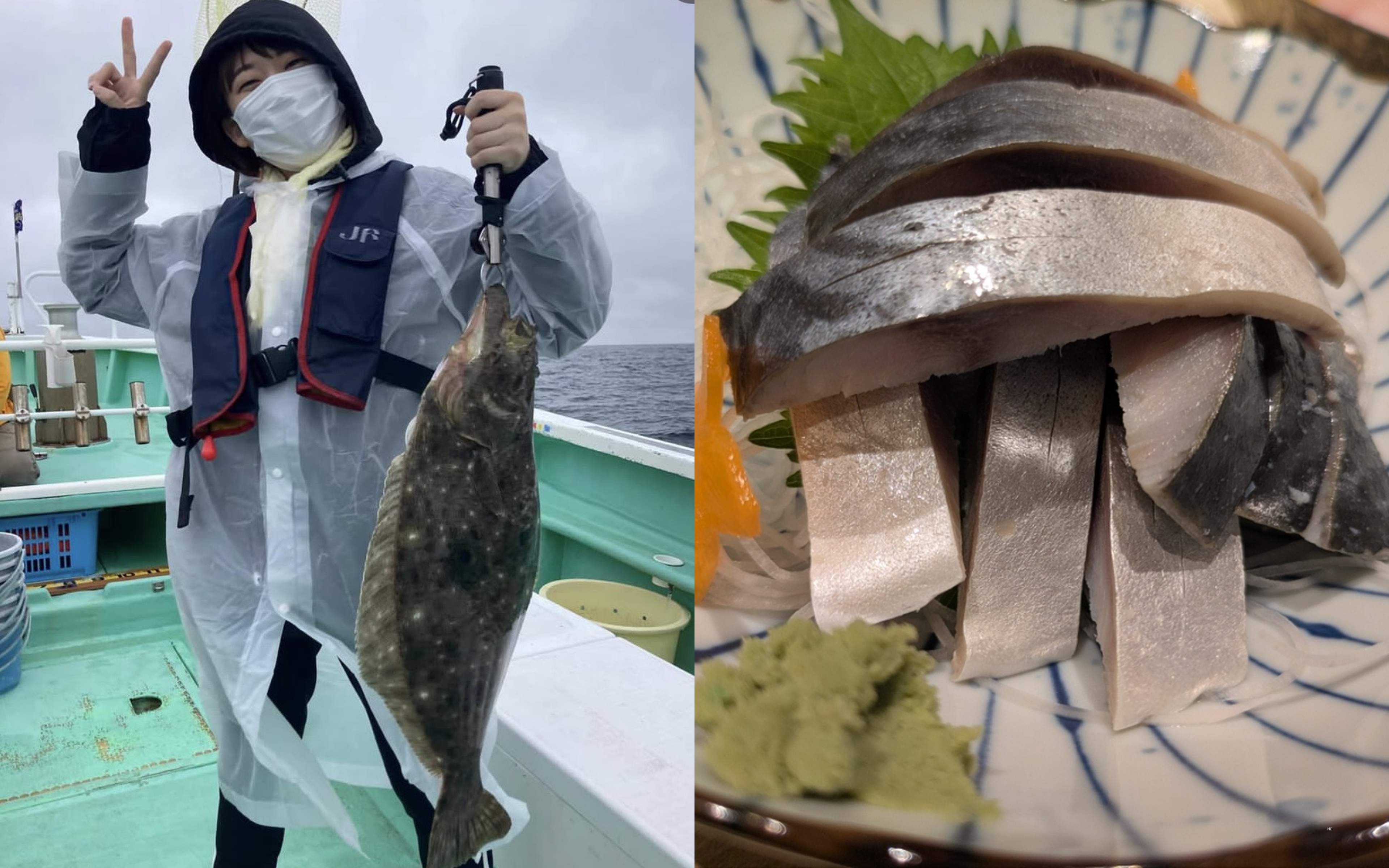
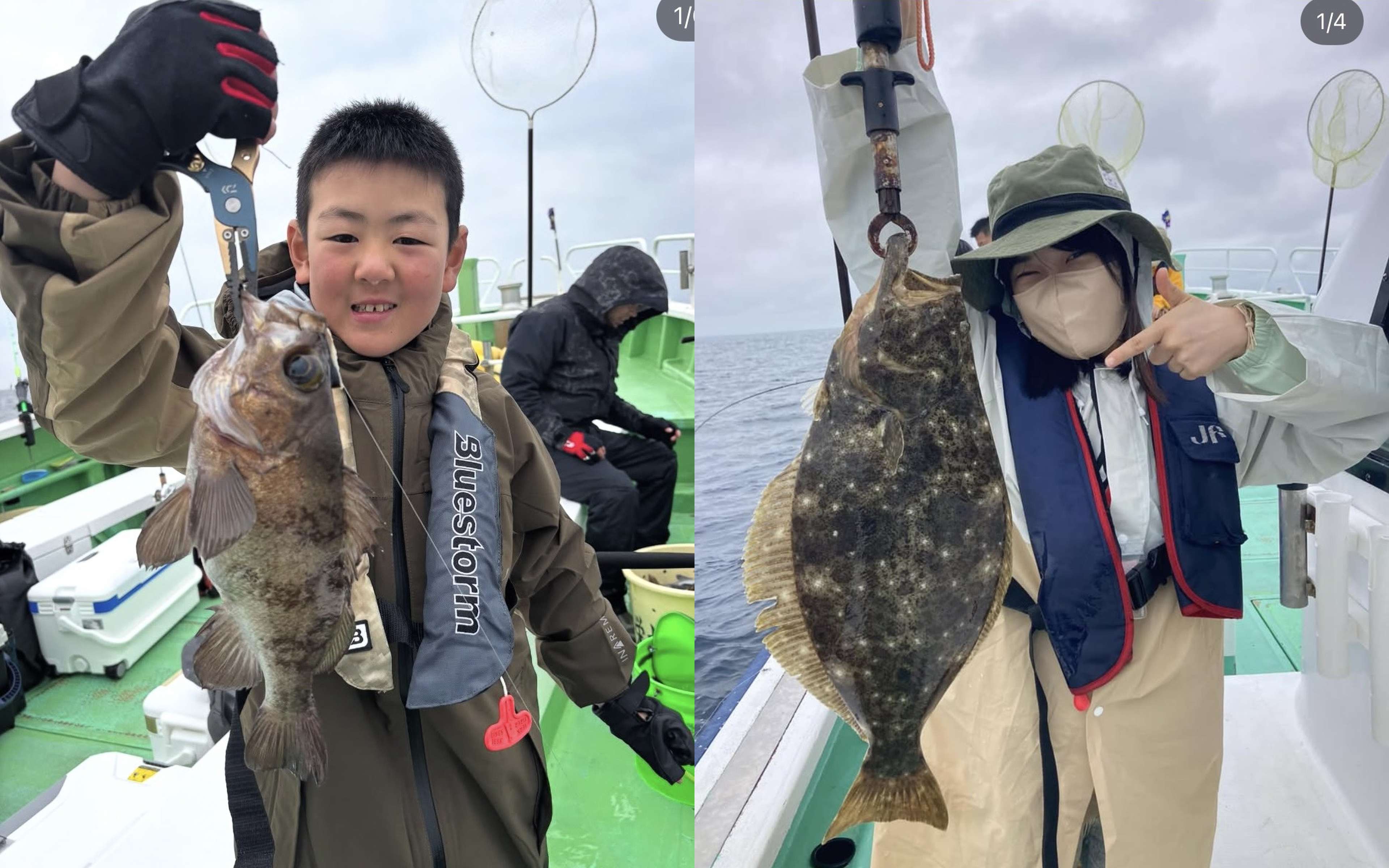
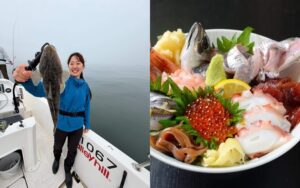
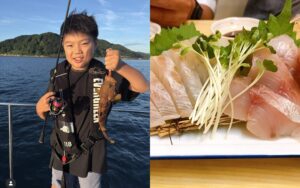
The rod tip dipped, paused, and then kept sinking, and what finally broke the surface aboard Choei-maru was flat and broad-bodied — a flounder, with an orange jig still caught in the corner of its mouth. Captain Ishii Hirokazu's boat carries a 4.9 rating from local anglers online, and it doesn't take long on deck to see why.
Why Tomioka Is a Hidden Gem for Fukushima Coast Fishing
The waters off Tomioka sit within what locals call the Joban grounds, where the warm Kuroshio Current and the cold Oyashio Current collide. That collision is part of what makes the fishing here so mixed — slow jigging and tairaba can turn up flounder, red seabream, and rockfish all in the same drift, sometimes within minutes of each other.
Fish here also bite differently depending on what's on the other end of the line. Flounder tend to take a beat before the weight builds; rockfish hit and bolt the instant the hook sets. On the same stretch of bottom, the rod tip alone starts to tell you almost as much as the catch itself.
The Fishing Experience – Step by Step 🎣
- Arrive at Tomioka Fishing Port. Captain Ishii Hirokazu runs Choei-maru out of Hotokehama-Kamada — no confusing signage, just the boats tied up along the quay, a short walk from the station.
- Board and settle in. The cabin has power for electric reels, a seawater hose on deck, and forty rod holders lined along the rail — more gear space than most charters bother with.
- Head out and watch the fish finder. Between the standard sounder and the onboard Tankenmaru unit, you can watch the bottom structure appear on screen before your jig even reaches it.
- Fish. Slow jigging, tairaba, or bait, depending on your trip — long stretches of nothing, then suddenly a rod bent hard enough that everyone on deck looks over.
- Head back to port. Whatever came aboard rides back with you, ready for the walk into town.
Fishing Methods & Target Species
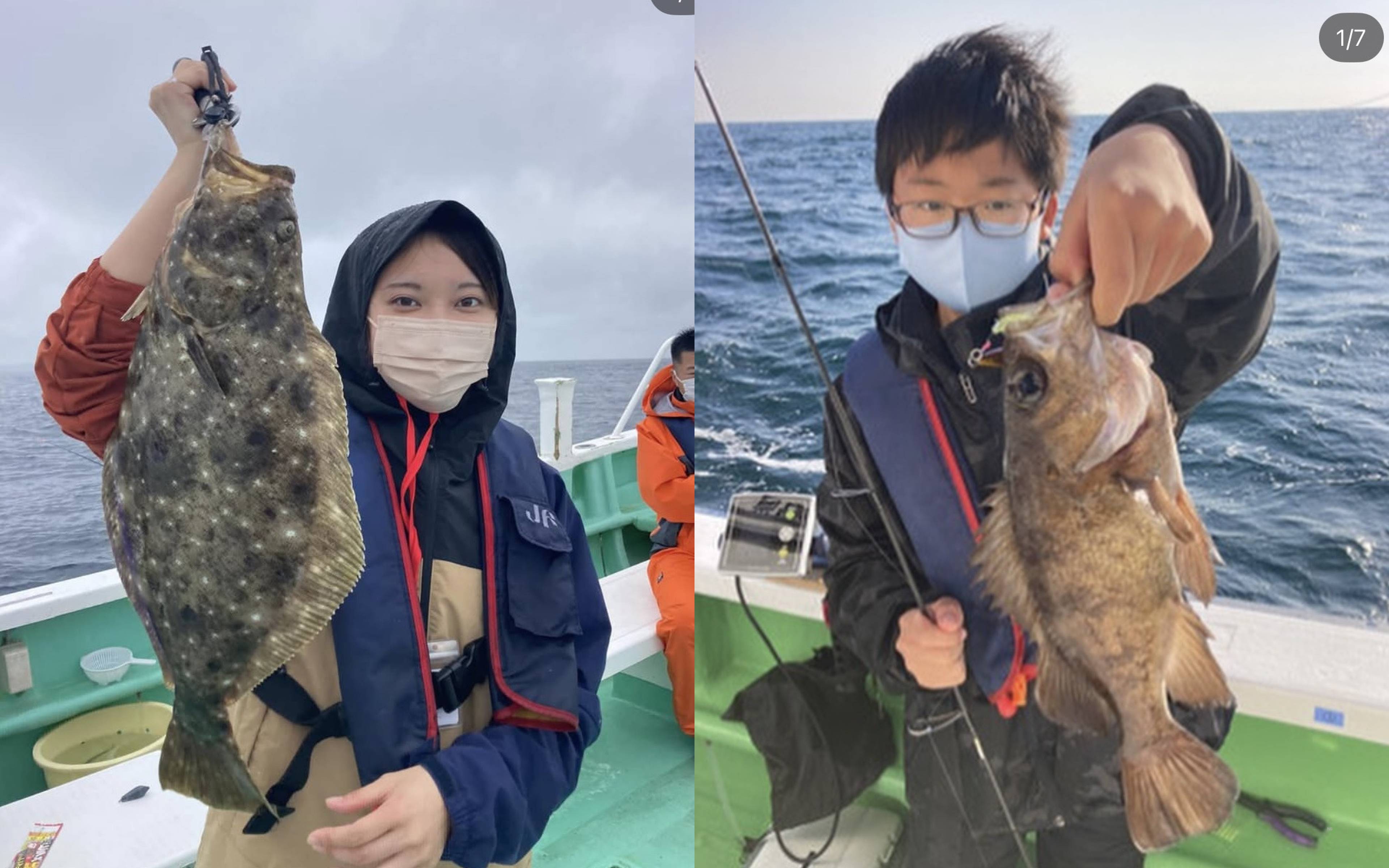
- Slow jigging for flounder (hirame) — the signature catch aboard Choei-maru, worked slowly along the bottom off Tomioka.
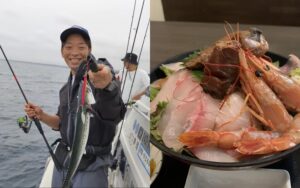
- Tairaba for red seabream (madai) — a steady producer through the season, fished with the same slow-jigging gear.
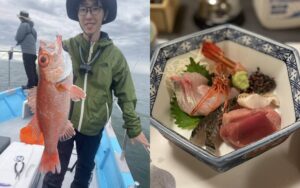
- Mid-depth jigging and bait fishing (hitotsu-tenya, three-hook gomoku rigs) for rockfish (mebaru, soi) and fat greenling (ainame) — bottom species that come up between the bigger bites.
- Frozen sardine bait for flounder, plus amberjack, rosy seabass (akamutsu), and Pacific cod on aji-bisi tackle — the boat runs a genuinely mixed bag depending on the day.
- A season that keeps changing — what's actually biting shifts through the year, so I check current conditions with the captain before you book.
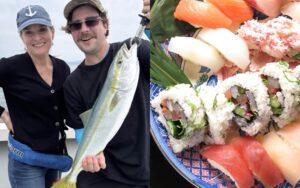
Flounder is one of the signature fish of joban-mono — the catch from the Joban grounds off Fukushima, where the Kuroshio and Oyashio currents collide — and one of the species covered by the resource-management fishery Fukushima pioneered nationally (fry release, a ban on landing fish under 30cm).
Dinner After the Charter – Kushisei 🍶
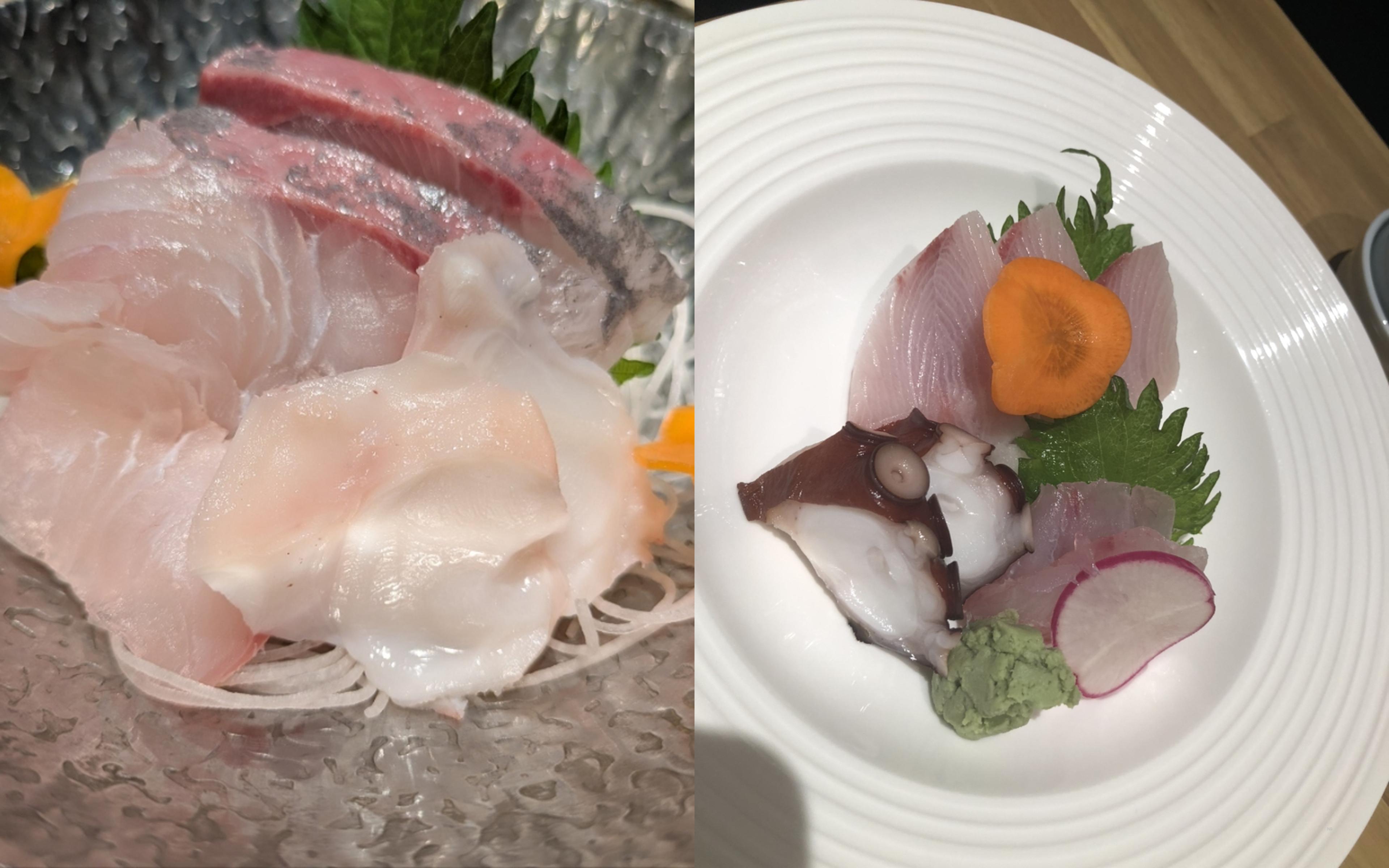
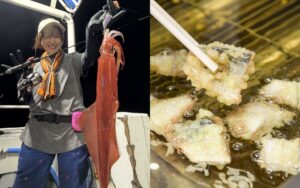
Kushisei is a kushiage izakaya standing about two minutes' walk from Tomioka Station — skewers of meat, vegetables, and seafood, breaded and fried to order at the counter. It sits roughly eight minutes on foot from the port itself, so the walk from Choei-maru's mooring to a stool at the counter is a realistic plan without ever needing a car.
I arrange the evening directly once your schedule is set, so dinner in town connects smoothly with the morning on the water.
🗣️ Traveler Reviews – Why They Chose This Charter
🗣️ ⭐️⭐️⭐️⭐️⭐️
I'll admit I was nervous about finding the port on my own with a suitcase in tow. Then it turned out to be a straight seven-minute walk from the platform, no taxi needed. Every time someone's rod bent double, the whole boat leaned in — you didn't need a shared language to understand that part.
— Liam (Ireland)
🗣️ ⭐️⭐️⭐️⭐️⭐️
My son spotted a shape light up on the fish-finder screen seconds before his line went tight, and he hasn't stopped talking about "the blip that turned into a fish" since we got home. Watching that connect in his head, right there on deck, was worth the whole trip on its own.
— Hannah (Canada)
🗣️ ⭐️⭐️⭐️⭐️⭐️
I stayed out until the light started going orange, when the deck gets quiet and it's just you and the rod tip. When the last flounder of the day came up, I heard someone a few feet away clap softly, almost to themselves. Small moment, but I still think about it.
— Thomas (Germany)
Reservation, Access & Pricing
Official Links ✨
- Choei-maru official website: http://choeimaru.sakura.ne.jp/
Important:
Read the full pricing and schedule section before reserving — the departure time varies by season and by trip type!
Budget Guide 💴
Expect to budget $200–$300 per person for the full package — this covers guide arrangement, booking negotiation with the captain in Japanese, and English-language support throughout your day. Costs for rental gear, any licensing needs, and dinner afterward at the partner restaurant vary and are arranged separately based on what you need.
Fishing Difficulty 🎯
Solo Travelers · Couples & Small Groups · Age limits and group minimums are set by each boat
Tackle rules differ too — some boats hire out rods and reels, some hire out nothing but life jackets. I confirm this boat's rules with the operator before you book; what is already confirmed for this one is in the Schedule section above.
Note: Catch results depend on nature — success is never guaranteed!
Schedule 🕘
Choei-maru runs two types of trips. Slow-jigging charters depart at 6:00 and return by 13:00; mid-depth jigging trips leave an hour earlier, at 5:00, and are back by noon. I'll confirm which one fits your dates once we're in touch, along with the exact meeting time at the port.
What to Bring 🎒
☀️ Spring/Summer: Sunscreen, sunglasses, a wide-brim hat, plenty of water, and light snacks. The deck is fully exposed — no shade. Stay hydrated, especially on early-morning departures and the return leg.
❄️ Autumn/Winter: The sea is colder than on land. Dress at least two layers warmer than you would ashore, and bring a windproof outer layer.
👟 Footwear: Water-resistant shoes or sandals that can get wet and won't slip on a wet deck.
📦 Optional: Motion sickness tablets if you're prone to seasickness, a towel, a change of clothes, and a camera.
🚚 For travelers continuing to another city: Cool-pack delivery of your catch to your next accommodation can be arranged on request.
Full seasonal gear details: Spring/Summer Gear Guide · Autumn/Winter Gear Guide
Why Book Your Charter Through Me?
Most Japanese fishing boats accept reservations only in Japanese.
Partner restaurants typically do not advertise "cook-your-catch" or sushi-making courses on public-facing menus.
That's why I handle all direct negotiations and arrangements — so your day runs without friction.
- ✅ I contact the captain directly in Japanese to confirm your date, party size, and preferred fishing style.
- ✅ Before departure, I'll walk you through the full day schedule so you arrive confident and prepared.
- ✅ I coordinate the dining experience and meal timing at the partner restaurant so everything connects seamlessly.
- ✅ I handle any allergy, dietary, or special-requirements communication with the restaurant.
- ✅ If bad weather forces a cancellation, I'll immediately propose alternative sightseeing options so your day isn't wasted.
- ✅ On-call support in English throughout the day for anything that comes up.
- ✅ I am the only guide in Japan specialising in fishing + dining packages for international travelers.
Frequently Asked Questions
- "I want to try fishing in Japan but have absolutely no idea where to start." 👉 That is exactly what I am here for — guiding international travelers through the whole process is my specialty.
- "I only have one day here. Can I really fit fishing into my itinerary?" 👉 Often, yes — but departure and return times vary enormously, from pre-dawn starts to trips that finish after dark. See the Schedule section above for this boat, tell me your dates, and I'll work out what fits around the rest of your trip.
- "Is it safe for kids and beginners?" 👉 Wearing a life jacket is the rule on Japanese charter boats, and many of the boats I work with take complete beginners. Age limits are set by each operator, though, and some do not take children at all — so check the Schedule section above, or ask me and I'll confirm before you book.
- "I don't speak any Japanese. Will I be able to manage on the boat?" 👉 Of course. I brief you thoroughly in English beforehand and stay in contact throughout the day for anything that comes up.
- "Can I rent fishing gear on the day?" 👉 It depends on the boat. Some hire out rods and reels; others hire out nothing but life jackets and expect you to arrive with your own tackle. I check what this boat does before you book, and if you need to bring your own I'll pass on the exact specifications it asks for.
- "What if the weather is bad on my day?" 👉 Safety always comes first. If the charter is cancelled due to rough seas, I'll have an alternative day plan ready for you immediately.
- "Do all plans require a minimum group size?" 👉 It varies by boat and by plan — some take solo anglers on a shared boat, while a private charter often sets a minimum. Tell me your party size and I'll find the plans that work for it.
How to Get to Tomioka Fishing Port
Tomioka Station, on the JR Joban Line, sits about 0.5km from the port — roughly a seven-minute walk through Hotokehama-Kamada. Kushisei is about two minutes on foot from the same station, and the walk from the port to the restaurant is about eight minutes. Station, port, and restaurant all fall inside a 600-metre radius, so the whole day runs on foot, with no rental car needed.
How Fukushima's Catch Is Tested for Safety
Fish landed off Fukushima are screened twice: the fisheries co-operative tests every species it lands, on the day it lands, and the prefecture runs its own continuing radioactivity monitoring. Japan's limit for radioactive caesium in general food is 100 becquerels per kilogram, and anything above it is pulled from shipment by the national government. In the prefecture's official testing, marine catch exceeded that limit four times between fiscal 2015 and October 2023 — most recently black rockfish in fiscal 2021 — and in the latest round of samples, collected between late July and mid-August 2026, caesium was not detected in any of the 34 marine samples across 28 species.
Summary
Seven minutes off the train and you're already handling a flounder on deck; seven minutes back and you're at a counter with the smell of hot oil in place of salt air. It's a full morning of joban-mono fishing built for someone without a car, and if that sounds like your kind of day, let's start working out dates.
🗣️ ⭐️⭐️⭐️⭐️⭐️
I only had one morning free in Fukushima and almost skipped booking anything, assuming it would be too much hassle to reach. Then I realised the whole thing — train, boat, dinner — fit inside a walk I could do in sandals. I'll take that kind of logistics over most tours I've paid triple for.
— Olivia (South Africa)
👉 中文咨询请点击此处 ※使用翻译软件进行处理
※ Guest voices in this article are illustrative scenarios based on typical experiences, not actual customer reviews.

Comments